Sunday, October 30, 2005

fish tale

Once I caught a fish alive,
she had to live, she couldn't die.
She jumped back in the river fast,
she smiled at me as she swam past.

Thursday, October 20, 2005

first wheat

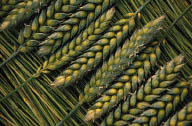
The great plant of western Canada is not the maple leaf even though it adorns the national flag. The great plant of western Canada is wheat. The golden sheaves swaying in the prairie wind conjures images of the open spaces and big skies of Saskatchewan and Alberta.

So this year my homage to the pioneers and settlers of the west was to grow some wheat in my garden. A friend got some wheat grain from his farming father in Saskatchewan because I found no where that just sold wheat grain to the general public. I turned the soil and then create a shallow drill into which I popped the grain. I the turned the soil over and that was that.

I was late in planting my grain (June 11th) so I knew I would be harvesting late. We have had a wet summer so although the wheat shot up it remained green for most of the summer. Occasionally I would take a kernel of wheat and check to see how it was drying up, other than that I did nothing. We have already had our first frost but wheat can survive that.

Last weekend I harvested the wheat, the next challenge will be to separate the wheat from the chaff.

Friday, October 14, 2005

heart broken heart mended

Last week my father underwent heart surgery to have a triple by-pass and a valve replaced. The operation took place in Dublin, Ireland meanwhile I was in Calgary, Canada 6609 kilometers (4107 miles) away. Such is the life of an emigrant, such is the life of an emigrant's father.

I have become accustomed to the feelings of uselessness and to the sense that in some respect I have abandoned my family. I have become accustomed to experiencing major family events by proxy through the telephone, internet or photos. I have become accustomed to these things but I am not happy about it.

My father is doing well and when I talked to him I was struck by his thankfulness, optimism and peacefulness. I am still learning from him.

Something inside me made me leave my hometown and my home country. I have created a life and a family away from there but it has come at a cost for me and my family.

Would I want my child to do the same?

Tuesday, October 11, 2005

koans and ergos

A koan is a statement contemplated by zen practitioners in the hope of enlightenment. Usually questioning and open-ended by nature, koans defy rational enquiry but may awaken other aspects of the mind. It would be misleading to regard them as puzzles as koans have no fixed answer.

A famous/infamous koan is "two hands clap and there is a sound; what is the sound of one hand?" A rational contemplation may suggest an answer (silence) but for other philosophical interpretations see here.

To my western mind koans seem frustrating because the question is framed within a rational context and yet the intent (enlightenment) can not be achieved by responding in the same context. Undoubtedly there is much I am missing when it comes to koans. Om.

Rational contemplation is something I can grasp and to focus this I suggest thinking on a phrase. This phrase is not a question but an answer for which someone can contemplate the question. It too has no fixed response but unlike a koan it may be subject to rational contemplation. Consideration of such a phrase may result in enlightenment but of an earthly kind. In homage to Descartes I will call this kind of phrase an 'ergo' which is Latin for 'therefore' and forms part of his cogito ergo sum statement.

Contemplate what question this ergo is the answer for?

"Life is brief but offers a few sublime moments."

Monday, October 03, 2005

first snow

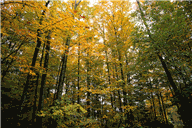
Today October 3rd, in Calgary, we have just had our first fall of snow. Officially it is still fall as winter, in North America, officially begins with the winter solstice on December 21st. This contrasts with the United Kingdom and Ireland where it begins on November 1st (all hallows or samhain) and the solstice marks mid-winter.

Either way for me, the first snow in Canada reminds us to enjoy the remaining days of fall. As a small aside, fall was a term used in England during Elizabethan times and was transferred to the colonies where it remained in usage. Back in England it fell out of usage and autumn became the preferred name for this transitional season.

No spring, nor summer beauty hath such grace
As I have seen in one autumnal face - John Donne

Thursday, September 29, 2005

weaselhead epiphany

I went for a run this afternoon in the Weaselhead. This protected park is five minutes drive from our house but in every other respect is a world away. Leaving behind the baseball diamonds and soccer pitches of suburbia, you enter a very accessible piece of nature within the city. I ran on the main path as far as the bridge which is around 3 kilometers (1.9 miles) and then returned via the forest. The forest path winds up and down away from the river and onto the escarpment that forms the southern boundary of the lake.

Growing tired I left the main path and slowed to a walk on a back woods path which led to an opening in the woods. Sitting down on a fallen tree, I could hear the wind teasing the leaves off the birch and willow. These deciduous trees are 'standing down' so the evergreens can regain their preeminence in the forest for the winter. The spiders webs catch the light as well as the flies and all seems peaceful.

A voice whispers, ' this planet is wasted on humans'. I stand up and feeling like Adam, an intruder, I leave and return to suburbia.


For more information ...
weaselhead

Saturday, September 24, 2005

this week I am drinking


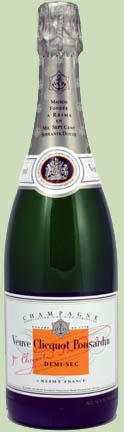
This week I am drinking Champagne of which I am by no means a big fan. It can be overpriced and overrated, the dryness is often too much and I find it causes a burning sensation in the throat or even heartburn. Combine this with the reputation it has among the 'ignoranti' of rappers and footballers and well, let's just say I am put off buying it.

I have typically tried the Veuve Clicquot yellow label which is dry and produces (for me) the burning sensation described above. This week however my in-laws introduced me to the Veuve Clicquot demi-sec. This wine has a creamy smooth finish with a fruity, biscuity taste to match. This is a champagne to have with desert or even on its own. It is a little pricey at around $CAN35 ($AUS39/25EURO/17UKP prices will vary by region) but if you have something to celebrate try this champagne rather than the more popular yellow label.


For more information ...
veuve clicquot demi-sec

Wednesday, September 21, 2005

peek and boo discuss life and meaning

Somewhere in this land. Late evening. Peek and Boo sit drinking at the inn.

Peek: It has got to mean something hasn't it?

Boo: Life, it means nothing.

Peek: But do you not think of the man upstairs and what he means?

Boo: Not often ... but too often.

Peek: And do you not think it means something because of him and what will come after?

Boo: What will come after?

Peek: I don't know, something nice and cozy maybe?

Boo: Well then, it can mean that for you.

Peek: What do you mean?

Boo: You can make it mean what you want it to. For me, I make it mean nothing.

Peek: Watch out, here she comes, the widow's daughter.

Boo: Where?

Peek: Behind you .... hello, Seeke.
Enter Seeke in foreground and Hyde in background.

Seeke: Hello Peek, hello Boo.

Boo: Hello Seeke.

Seeke: How are you now?

Boo: I'm fine, I have a glass of wine in hand and a friend to talk to, what more could a man want?

Seeke: A woman to hug.

Boo: The right woman who would hug back, to be sure.

Seeke: And at the right time to!

Boo: Would the time be right?

Seeke raises a wine glass and looks into it, thinking.

Seeke: The time might be right.

Boo: I will see you outside then?

Seeke: Yes, but who will escort Hyde home?

Boo: I am sure Peek will, where is she?

Seeke: Over by the fireplace, shy as always.

Peek: I will show the lady Hyde home, now you two begone!
A whispered aside to Boo.
So it means nothing then?

A whispered aside to Peek.
Boo: It means nothing but perhaps I will try to make it mean something.

Two get up and exit.


For more information ...
peek and boo discuss thought and action
peek and boo discuss existentialism
peek and boo discuss writing
peek and boo discuss god
peek and boo discuss power

Tuesday, September 20, 2005

ladybirds and ladybugs

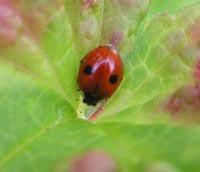
We have seen a large number of ladybirds around Calgary in the last week or so. Perhaps a last flourish of activity before the autumnal frosts kill off these little bugs?

The ladybirds we see are called two spotted lady beetles ('Adalia bipunctata'). The bright wings are attractive to humans but are intended to ward off predators.

In England and Ireland we call them ladybirds in the US and Canada we call them ladybugs. Divided by a common language even at the insect level!


For more information ...
ladybirds

Tuesday, September 13, 2005

this week I am drinking


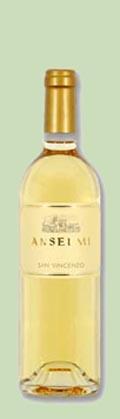
This week my Giro D'Italia passes through the Veneto region in north eastern Italy. The wine we are sampling is an Italian white, soave (pronounced swa-vay). This 2002 San Anselmi is made from garganega and trebbiano grapes like most soave. Roberto Anselmi is renowed for his innovative wine making and his insistence on not been confined by the DOCG regulations. This wine gains the IGT (indicazione geografica tipica) label but it would be incorrect to read into that lower quality.

Distinctive citrus and apple tones with some oak (possibly?) make this an interestingly different wine to drink. A definite sweet quality but with a smooth rather than syrup finish. Try this suave soave sometime soon!


For more information ...
docg or igt?

Sunday, September 11, 2005

so what does life mean

The previous articles suggested thought as a priority in a sense of personal identity, it also suggested aligning behaviour with thought and furthermore it suggested that sharing and contribution are fundamental to our concept of society.

All very well and good but life is the medium within which the 'I', 'you' and 'we' exist. We need to add to our understanding of the 'I', 'you' and 'we', an understanding of life and what it means. And therein lies the problem, so what does life mean?

Starting simply, we could say that life either has meaning or it does not have meaning. If life has meaning that meaning could be inherent and part of the nature of life itself. Most religions express meaning as central and inherent to life itself. This meaning is taken as an a priori fact, i.e. the meaning exists independent of our experience. Here is an illustration, 'Jesus died for our sins and gave us a second chance to enter the kingdom of heaven if we follow his teachings', that meaning exists prior to any experience a child who is born tomorrow will have. For that child it exists a priori. This a priori meaning is taken to be universal.

An opposing view could be that if life has meaning that meaning is extraneous to the nature of life and is something we impose. It could be considered as an a posteriori fact, i.e. meaning is only derived after and because of our experience (see note). Indeed I would say that although many claim to derive an a priori meaning from religion they impose an a posteriori meaning based on their experience of religion rather than the doctrine per se. For example, the meaning of life for me is to play soccer, this meaning to life could not have existed prior to my experiences that gave rise to it. This a posteriori meaning is personal but others could share a similar meaning

Of course we also have the nihilists who would say that life is without purpose or meaning. Nihilists rejection of either a universal or personal meaning is logically subverted since their position claims in itself to be a truth. Life indeed may mean nothing but if I make that claim I am saying something which means something and at some level has at least personal meaning.

I would suggest that nihilism is an untenable position not because life may necessarily mean something but because as humans we strive to give it meaning. Can the meaning of life be anything other than personal? I would suggest not so therefore received a priori meanings can only act as input for our formulation of a personal a posteriori meaning. I do think that this a posteriori meaning whilst deeply personal is not solipsism because we are social by nature and do want to share our understanding with others.

So, what does life mean? ..... We don't find meaning, we create it. The meaning of life is the meaning we give to life and the meaning we choose to share with others.


Note ...
I have used the terms a priori and a posteriori loosely, for further definition and clarification see here.

For more information ...
so who are we
so who are you
so who am I
a balanced life
nihilism
a priori

Tuesday, September 06, 2005

this week I am drinking


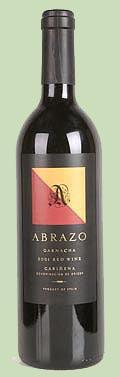
This week I'm drinking a Spanish red, Abrazo 2003. I believe it is made from 100% grenache or garnacha as the Spaniards call it. Drink by itself or enjoy with St.Augur blue cheese or spaghetti and meatballs.

It shows good fruit flavours, is light on tannins and shows some hints of pepper or perhaps slightly earthy tones (may be getting into bullshit territory there). This wines comes from close to Zaragoza where my sister lives and I have to admit to been envious that she probably has much easier and cheaper access to it than I. This light very drinkable wine is still a steal at $CAN11/$AUS12/EURO7.5/UKP5 and has got to be the best value wine I have drank all year!

Abrazo is the Spanish for hug, make sure you hug a bottle of this wine sometime soon!

For more information ...
review

Wednesday, August 31, 2005

peek and boo discuss thought & action

Somewhere in this land. Early evening. Peek sits on the edge of a river looking in but then looks skyward.

Peek: Ah! the evening star and the morning star, Venus, a woman to love.

Peek returns to looking into the river but is disturbed by Boo's entrance.


Boo: She's a whore and a bitch! No more, I tell ya!

Peek: Steady on there, easy as she goes!

Boo: Well that's it I tell ya, I'm finished with her.

Peek: The widow's daughter?

Boo: Yes, the very same.

Peek: She does what she wants, when she wants with whom she wants. I thought that was what you liked about her.

Boo: I was a fool if I said that and you said my words would help me cajole her! You were a fool for saying that.

Peek: Now we both know better.

Boo: We are both fools to be sittin' here looking into the muddy river when others are laughing at the inn or lovin' in a barn.

Peek: Yes, we are foolish with our actions if not our thoughts.

Boo: They should be one and the same.

Peek: Exactly, we should only do what we have thought about and think about what we can do.

Boo: You lost me.

Peek: Our actions should be considered, for many people their actions are just reflexive habits. You scratch an itch without thinking about the consequence.

Boo: The widow's daughter could handle an itch I have, I can tell you that.

Peek: And the consequences? Maybe she has stopped itching you scratch because she is clever enough to think about the consequences.

Boo: She might be right but I can't help thinking about her?

Peek: Well you can and that's the second part, don't bother thinking about that which you cannot act upon. It's probably out of your control, think about what is within your control.

Boo: And those things I think about that are within my control, I should do something about those?

Peek: Yes, you're getting the hang of it.

Boo: The widow's daughter is far too smart for me. Why don't we go to the inn?

Peek: You might find a Venus there who thinks your actions and thoughts are just fine, let's go.

Boo: Yes! Let's go!

Two get up and exit.

For more information ...
peek and boo discuss existentialism
peek and boo discuss writing
peek and boo discuss god
peek and boo discuss power

Wednesday, August 24, 2005

so who are we

After writing the first article in this series (so who am I), the second (so who are you) was a natural successor. Those two and another (a balanced life) prompts a third in the series. It seems now that I should extend these thoughts and ask ...

So, who are we?

Implict in the question is that something is or could be shared between us. As per the previous articles, using thought as our cornerstone and matching our thoughts with actions (and vice versa) we are striving to share an understanding. We are striving to share an understanding of our universe, our experience and our self. If we do not do this then there is no 'we'.

So, who are we?

We share something. What is it we share? We share our understanding of the universe. Can there be this kind of 'we' if we are not open to hearing others people's understanding of the universe? No, there can only be a 'we' if all parties of the 'we' get to share their understanding (note, sharing does not imply agreement). This 'we' is often instantiated through our discussions of religion, science or natural philosophy and our practice of those.

So, who are we?

We share an understanding of our experience, we may even share some of the same experiences. This 'we' is often instantiated through our discussions of psychology, myth, or personal and social histories. It may be instantiated through group activity like playing soccer, stealing car stereos or playing the fluglehorn.

So, who are we?

We share an understanding of our self. This 'we' is often instantiated through our close relationships with friends and family, through our gossip, through our biographies and our betrayals.

It can be seen that there is more than one 'we'.

So, who are we?

We share understanding of our universe, experience and our self in multiple connected but possibly distinct instances. Each of these instances is a society in itself. Perhaps it is worth asking what we contribute to each. What do you contribute to a shared understanding of the universe? What do you contribute to a shared understanding of your experience? What do you contribute to a shared understanding of your self? Can there be any society without sharing and contribution?

So, who are we? ..... We share our understanding. ..... We contribute to our societies.

For more information ...
so who am I
so who are you
a balanced life
society

Monday, August 22, 2005

summer picks

Summer is hard and thirsty work! Here are my top picks for summer starting with the best.

1. Calona Vineyards, Artist Series, Pinot Gris, 2004 - Okanagan Valley, B.C., Canada (17/20)
"dry, crisp, fruit with vegetal notes"

2. Montes Alpha, Cabernet Sauvignon, 2002 - Colchagua Valley, Apalta Vineyard, Chile (17/20)
"fruity, berries, firm tannin, leathery, long finish"

3. Pierre Boniface, Apremont, 2004 - St. Andre, Les Marches, Savoie, France (17/20)
"grassy nose, citrus, apple notes, very drinkable"

4. La Vieille Ferme, White Grenache, 2004 - Luberon, Rhone Valley, France (16/20)
"dry, light, citrus, bitter, crisp, a little short but very nice"

5. Les Charmes, Touraine, Sauvignon Blanc, 2004 - Touraine, Loire, France (15/20)
"quite fruity, grassy nose, apple notes, a little bubbly"

6. Cedar Creek, Pinot Noir, 2001 - Cedar Creek & Greta Ranch Vineyards, Okanagan, B.C., Canada (15/20)
"berries, earthy, wood, and leather notes"

The summer saw my 'Tour de France' continue so the 13 bottles we drank were dominated by 7 from France, then 4 from Canada and one each from Germany and Chile. To quench the summer thirst we had 10 white, 2 red and a rose.

I am not surprised to see the French whites take centre stage in the list, the Apremont in particular is worth trying although wines from the Savoie may be hard to find. The Chilean Cabernet Sauvignon was a real nice bottle, a gift from friends it cost around $CAN24/EUR16/UKP11/$AUS26. The La Vielle Ferme should be readily available in most places and is very quaffable, we knocked back 3 of these over the summer.

I am now ending my 'Tour de France' and think I will take up a 'Giro D'Italia'. The wines from 'down under' also deserve more attention, so I expect I will sample some of those.

For more information ...
late spring, early summer picks
calona vineyards
montes alpha
apremont (review)
la vieille ferme
cedar creek

Wednesday, August 17, 2005

so who are you

So, who are you?

Previously I discussed an evolving sense of self (so who am I) and how thought can form a cornerstone on which a rational, examined life could be constructed.

We have an interior self that is constructed primarily from our thoughts. We also have an exterior self that is constructed primarily from our actions, the clothes we wear, our words, our choices in life, etc.

The interior self is private although others may speculate about it they can not experience it. The exterior self is public and is experienced by others. We can have experience based opinions of our own interior and exterior self but we can only have an experience based opinion of someone else's exterior self. We can speculate what others interior self may be like but we can not base that opinion on experience because of course we are not them. This leads me to an assertion that in some regards we can never know each other.

So, who are you?

Are we each to be an isolated island with no interconnectedness or can we come to a deeper understanding of each other? Let's try on an idea and see if it fits!

There is a gap between our interior and exterior self. That gap will always exist to an extent because of the difference between thought and action. That gaps however is unnecessarily enlarged (and misaligned) because we do not think about what we do and we do not do what we think about. If our actions followed from our thoughts we might expect the gap to be smaller and our actions and thoughts to be more aligned. If the gap were smaller people's exterior self would reflect more the interior self and vice-versa.

Aligning our thoughts and actions is part of maturing. The size of the gap between our interior and exterior self may reflect our level of maturity. Those people who seem very purpose driven in life, think about what they do and do what they are thinking about. There seems to be a clarity to their life and this in part derives from the fact that the gap between their thoughts and actions is small. Life is simpler this way.

So, who are you?

Are you a thinking being who works at reducing the gap between your thought and action? Are your thoughts and actions aligned?

So, who are you? ..... You think. ..... You should do what you think. ..... You should think about what you do.


For more information ...
so who am i

Monday, August 15, 2005

everyone should try

In response to requests here are some wines that everyone should try. You all know I am no expert so this is not likely to be complete or representative. The intent is to help you the next time you go to buy a bottle of plonk.

1. Everyone should try a Bordeaux. Red Bordeaux is made from a blend of cabernet sauvignon, merlot, cabernet franc, petit verdot and malbec. The five top chateaux are generally too expensive to buy so if you find other Bordeaux just make sure they have the appellation controllee designation on the label. Bordeaux is classically matched with lamb but I think it would hold up well with steak also. Bordeaux classically tastes of blackcurrants, spice, cedar and cassis. Go for bottles that are 10 years or older.

2. Everyone should try a Burgundy. Red Burgundy (Bourgogne) is made from pinot noir, look for labels that say Cote de Nuit or Cote de Beaune. The village names to look for on labels include Geverey-Chambertin, Morey-St.Denis, Nuit-St.Georges, Pommard, Vugeot. Beef Bourguignon is the classic dish of the region and Burgundy would go well with it. Plummy, earthy, spicy, and mocha flavours define a good Burgundy.

3. Everyone should try an Australian Shiraz. There are many good Australian wines, their red shiraz with its peppery, fruit flavours is good and none more so that Penfolds Grange or the more affordable Peter Lehmans Barossa Valley Shiraz'. Eat with game or red meat or drink just on its own. Yummy!

4. Everyone should try a Chianti. This Italian red comes from the Tuscany (Toscana) region on Italy's west coast. Made primarily from the sangiovese grape, try to look for wines that have the DOC (denominazione di origine controllata) on the label. This is a dry, cherry flavoured red. Names to look for include Monsanto, Villa Cafaggio, Castellare, Frescobaldi, Ruffino, and Castello Di Ama. It may be a cliche but I like this with spaghetti bolognese.

5. Everyone should try a Barolo or a Baraberesco. Both are reds made from the nebbiolo grape, this a dry, full-bodied wine with hints of tar, violets and strawberries. Look for one that is nearly 10 years old or more and also look for the DOC or the higher DOCG on the label. I have not had much Barolo or Barbaresco but from reading (see footnote) I know to recommend those from the following Piedmont villages, Monforte d'Alba, La Morra and Castiglione Falletto. Drink with a rich meat, steak or some BBQ'd burgers.

6. Everyone should try a Rioja. This Spanish red is predominantly made from the tempranillo grape. Try ones from Rioja Alta and Rioja Alavesa areas. Tempranillo can give rise to fruity and earthy flavours that pair well with wild mushrooms fried in garlic. Names to look for include Marques de Murrieta, Cune, Rioja Alta and Marques de Caceres. All Rioja should have a 'Denominacion de Origien Calificada' on the label, also look out for a reserva or gran reserva that indicates the time aged in oak.

7. Everyone should try Sancerre. A sauvignon blanc white from the Loire Valley, these wines are crisp, acid, dry, and work with a wide range of food from Chinese to grilled salmon. I have not had a bad Sancerre, Domaine Henri Bourgeois is a good one that comes to mind.

8. Everyone should try a New Zealand Sauvignon Blanc. This white is very different than French sauvignon blancs, their intense bouquet won't be to everyone's liking but they are certainly worth trying. Oyster Bay and Cloudy Bay are two good makes. I have no idea what food to pair this wine with, it probably would hold up to some of the challenging tastes of fusion style cuisine.

9. Everyone should try a Chilean Cabernet Sauvignon. This red is full bodied and tastes of blackcurrant and cassis. They are quite robust and I recommend Montes Alpha or Santa Rita's cabs. Anything from the Maipo or Casablanca valleys might be good. This will work with steak or burgers.

10. Everyone should try Chablis. A light white chardonnay from the Burgundy region its flavours are more 'flinty, honeyed and acidic' than new world chardonnays. No oak here! Look for Grenouille, Bougros, Louise Michel, Guy Robin. Try this with seafood, it goes well with oysters.

11. Everyone should try a Canadian Riesling. This sweet white wine is famous in the Alsace region of France and southern Germany but the Canadian versions are good too. Try them with a salad. Hillside Estate create good Canadian Rieslings.

Other wines that everyone should probably try but I did not detail above include; a German gewurztraminer, a Californian zinfandel, a Californian pinot noir, a Washington State red, a Spanish Priorat, a white Alsace, a Portuguese red, an Austrian red, a German riesling, Beaujolais Nouveau, Chateauneuf du Pape, a Hungarian Tokaj, a French Sauterne, an Australian merlot, an Australian chardonnay and an Argentinean cabernet sauvignon. I also mentioned no pinot gris', pinot grigio, viognier or barbera based wines. Phew! There is just so much to try and only one mouth!

The information here is mostly based on my drinking experience but one invaluable resource has been Karen MacNeil's 'The Wine Bible'. A good gift for any wino in your life, I would highly recommend it.

It is the drinking and not the talking that is the fun part when learning more about wine. So now that you have a few pointers get boozing! After the hangover let me know how you got on!

For more information ...
the wine bible
Friday, August 12, 2005

this week I am drinking

My tour of French wine continues. Our local wine shop have a few bottles open on the weekend and one of those I tried recently I decided to purchase.

Pierre Boniface Apremont Vin de Savoie 2003 is a nice crisp, dry, citrus white wine, herbaceous and grassy nose. Enjoy with salad or some other refreshing light dish or simply quaff.

The wine is from the Savoie region which is centered around the city of Chambery, north of Grenoble and south-east of the Burgundy region. Apremont is just one of a number of crus in the Savoie region which lies in the foothills of the Alps. I believe the grape varietal is Jacquerre, which I know nothing about. A good summer's drink.

Tuesday, August 09, 2005

so who am I

So, who am I?

When I was eight my sense of self was constructed from a number of elements such as: I was a boy, I was a son, I was a sibling, I was Irish, I was Catholic, etc. At different times, different elements contributed to a greater or lesser extent toward my sense of self. When I made my first communion, the 'Catholic element' would have dominated. When I watched Eamon Couglan running for Ireland at the Olympics the 'Irish element' would have dominated.

Now that I am in my late thirties the elements include: I am a husband, I am a father, I am a man, I am a son, I am a sibling, etc. The relative priorities of the elements has changed and some have dropped off the list altogether.

So, who am I?

It is said that all the atoms in the human body change every seven years. So my physical nature is not constant and we can see from above that my sense of self is subject to change. I am reminded of Heraclitus' idea that everything is in flux. His saying 'no man can cross the same river twice, because neither the man nor the river are the same', seems to capture our predicament.

So, who am I?

Heraclitus not withstanding, a river that is frozen in winter, flooding in spring and meandering lazily in summer is still a river. It is a river because it is bounded, it is a river because it is a place where water can flow.

So, who am I?

I am a bounded physical being where thought can take place. It seems like I have ended up at Descartes classic 'cogito, ergo sum - I think therefore I am' position. What kind of a personal life can I build upon this cornerstone? Certainly I would see a rational, examined life as opposed to an irrational, unexamined life. Thought is the mother of action and Descartes' maxim establishes the primacy of that.

Establishing thought as a prime element of existence makes many nervous. The Nazi's misinterpretation of Nietzsche's concept of 'Übermensch' was perhaps an abuse also of Descartes' maxim. I view 'cogito, ergo sum' in an inclusive rather than exclusive way. The smallest scintilla of thought validates existence rather than existence been validated by higher thought. So perhaps this all helps with the question of who am I?

So, who am I? ..... I think. ..... I should try harder to be who I am.


For more information ...
heraclitus
I think therefore I am
Üœbermensch

Saturday, August 06, 2005

loire

The Loire Valley offers a diverse range of wines. White wines dominate the region with Chenin and Sauvignon Blanc and although reds from this region play second fiddle good Cabernet Franc wines are available.

The Loire running from east to west in central France has three areas of note. In the east, the towns of Sancerre and Pouilly-sur-Loire give us two classic wines. Sancerre is a light dry wine suitable for quenching a summers thirst, Pouilly-Fume is a little more robust and has a distinct 'flinty' character. Both are Sauvignon Blanc's and are more drinkable and less pungent than the very distinctive New Zealand 'blancs'.

In the central Loire valley is city of Tours. Chenin Blanc gives us the wines of Vouvray (a town near Tours) which can vary from dry (sec or demi-sec) to sweet (moelleux or doux). Tonight I will be trying a dry Domaine de Vaufuget Vouvray from 2002. The region also produces good Sauvignon Blancs, I recently opened a '2004 Les Charmes Touraine' which showed strong apple notes and the characteristic 'grassy nose'.

In the west of the Loire valley around the city of Nantes near the Atlantic coast we find the Muscadet grape (aka Melon de Bourgogne). This gives us the very light and dry wine of the same name which is typically a cheap but drinkable wine. Muscadet suffers from what I call the 'Blue Nun' effect* but don't let this put you off. Muscadet wine is often left in contact with the fermenting yeast for a number of months which can give the otherwise light wine more structure & character. Muscadet processed in this way usually have 'sur lie' on the label, so keep an eye open for that when choosing a bottle.

I have not had as much wine from the Loire as compared with Burgundy or Bordeaux but it does seem to offer a large diversity that would be worth exploring. Enough talk, I'm off to crack open that Vouvray, let the exploration begin.

* Blue Nun effect - I coined this term to describe the effect one poor, low reputation brand can have on a whole market. Blue Nun introduced many English people to wine in the 70's but the quality was low and its reputation put many people off trying other German wines. This is a pity because there are many good German Rieslings and Gewurtztraminers to be enjoyed.

For more information ...
bordeaux
burgundy
blue nun